Why the Kp Index is Lying to You: The 3 Real Metrics Aurora Hunters Use
The Kp index dominates aurora forecasting apps and media dashboards, conditioning enthusiasts to wait for a high number before venturing into the cold. But rigorous analysis of magnetospheric physics reveals a stark reality: spectacular displays can manifest during Kp 2, while Kp 6 often leaves skies dark and empty. Here’s why the Kp index is lying to you — and what to use instead.
The Fundamental Mismatch
The pursuit of auroral observation has historically been plagued by a mismatch between the dynamic, rapidly evolving physics of the upper atmosphere and the static, delayed metrics used to forecast them.
For decades, the planetary K-index (Kp) has served as the primary barometer for geomagnetic activity. Yet the aurora is not dictated by a three-hour global average. It is governed by the real-time interplay of the Interplanetary Magnetic Field (IMF), solar wind velocity, particle density, and the complex mechanics of magnetic reconnection.
Advanced observers and space weather physicists recognize this truth: relying exclusively on the Kp index frequently leads to profound observer frustration.
Why Kp=2 Yields Outbreaks While Kp=6 Leaves You in the Dark
The Architectural Flaws of the Kp Index
The Kp index was designed to quantify global geomagnetic event strength on a logarithmic scale from 0 to 9. It serves as an excellent indicator for managing electrical grids, spacecraft operations, and high-frequency radio communications. However, its utility as a real-time predictive tool for auroral hunting is severely compromised by two critical flaws.
The first flaw: temporal latency.
The three-hour planetary Kp-index is calculated by averaging the maximum horizontal magnetic field perturbations recorded by a network of 13 ground-based magnetometers distributed globally across high and mid-latitude regions. Because the index relies on historical data collected over a 180-minute window, it functions strictly as a rolling average of past global geomagnetic activity rather than a real-time monitor.
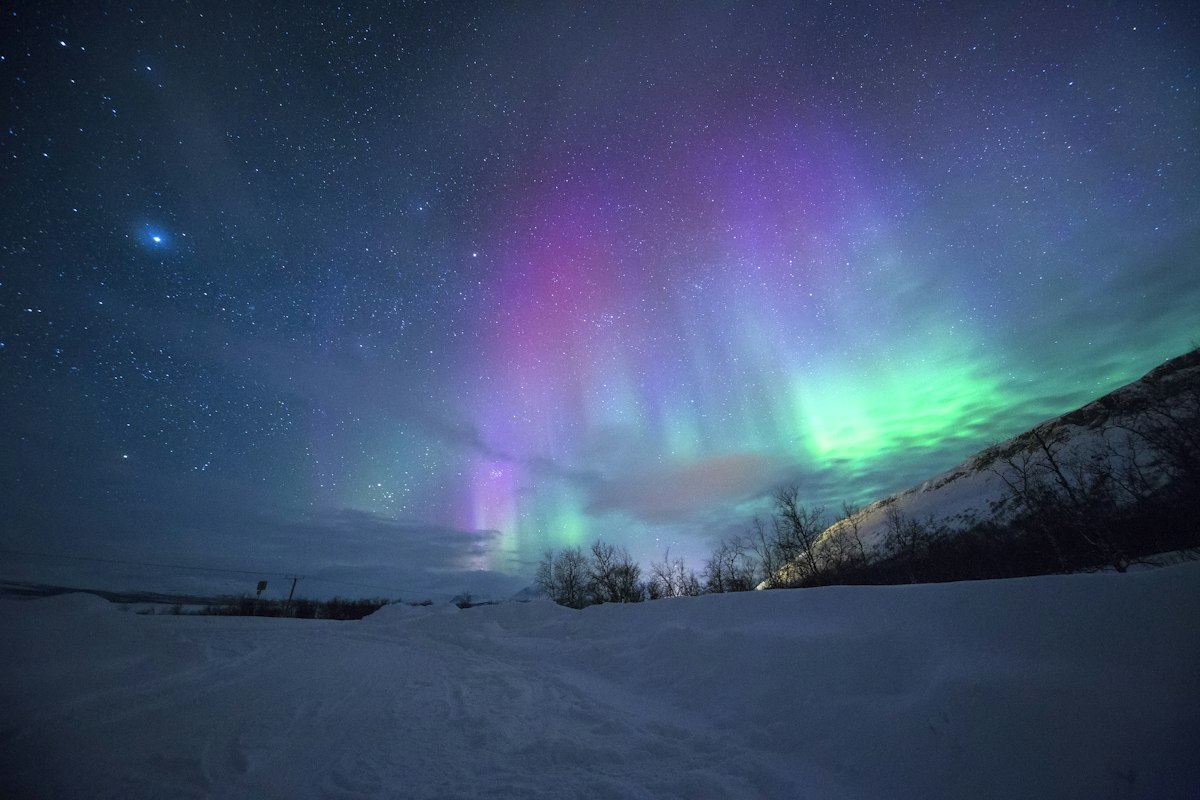
Auroral displays operate on a vastly different timescale. The visual phenomenon reaches maximum intensity during the expansion phase of an auroral substorm — which lasts only 30 to 60 minutes before the vibrant structures fade into a diffuse glow. When these short-lived, brilliant bursts are processed through a three-hour averaging algorithm, the intense fluctuations are mathematically smoothed out and erased from the predictive model.
Consequently, high-Kp alerts are frequently generated and distributed long after the actual auroral event has concluded. Observers reacting to a “Kp 6” alert often arrive at observation sites only to find clear, empty skies — completely missing the substorm because Kp is merely catching up to past physics.
The second flaw: spatial averaging.
Because Kp is a planetary average, it inherently dilutes localized spikes in activity. During specific localized substorms, the local K-index at the Kiruna magnetic observatory in Sweden has been observed to spike to level 5 — indicating minor geomagnetic storm conditions capable of producing vibrant overhead auroras — while the planetary Kp index for that exact same three-hour period remained suppressed at a quiet level 2.
This explains why observers situated in highly favorable magnetic latitudes can witness breathtaking, dynamic overhead auroras during a reported Kp 2, while those relying strictly on the global average remain completely unaware of the ongoing atmospheric precipitation.
Metric 1: The IMF Bz Field — The Key to the Auroral Gates
To transition from retrospective analysis to real-time proactive forecasting, the primary metric that must be continuously monitored is the Bz component of the Interplanetary Magnetic Field (IMF).
The solar wind carries the IMF throughout the solar system. When this continuous flow of solar plasma encounters Earth, it interacts with the protective magnetosphere. The specific orientation of the IMF as it impacts the magnetopause — the outer boundary where solar wind pressure balances Earth’s magnetic pressure — functions as the absolute, binary “on/off switch” for geomagnetic activity.
The IMF is a three-dimensional vector field (Bx, By, Bz), but its north-south orientation — the Bz component — is the critical determining factor. By physical definition, Earth’s magnetic field lines at the dayside magnetopause point northward. Therefore, the interaction between the solar wind’s IMF and Earth’s defensive field is strictly governed by the polarity of the incoming Bz component.
If the incoming IMF Bz is strongly positive (northward): the solar magnetic field lines run parallel to Earth’s magnetic field. Magnetic linkage is virtually impossible. The incoming plasma is aggressively deflected, flowing harmlessly around the magnetosphere — like water flowing around a ship’s hull. During highly energetic solar events even with extreme solar wind velocities exceeding 1000 km/s, a sustained northward Bz will effectively shield Earth from incoming particles.
When the IMF Bz component turns southward (negative): the magnetic orientation becomes anti-parallel to Earth’s field. This opposing alignment triggers magnetic reconnection — the fundamental physical mechanism that drives auroral substorms and allows solar energy to breach the magnetosphere. When southward IMF Bz encounters the dayside magnetopause, the opposing magnetic field lines break, reconnect, and effectively open a door in the planetary shield.
Once dayside reconnection occurs, the kinetic force of the solar wind drags open magnetic field lines over the polar regions into the magnetotail. Eventually, the continuous accumulation of magnetic flux renders the system critically unstable, forcing a secondary violent reconnection event in the middle of the tail. The stretched field lines violently snap back, accelerating highly energized particles earthward along the magnetic field lines.
As these energized particles precipitate into the upper atmosphere, they collide violently with atmospheric oxygen and nitrogen atoms, exciting atomic electrons to higher energy states. When the electrons relax back to ground state, they emit photons of specific wavelengths — producing the vivid green, red, and purple curtains recognized globally as the aurora borealis.
Bz Thresholds for Aurora Viewing
The intensity of an auroral display is inextricably linked to the depth and duration of the negative Bz component:
| Bz Value | Conditions | Aurora Probability |
|---|---|---|
| +2 nT to 0 nT | Northward (shield active) | Minimal to none |
| −2 nT to −5 nT | Weakly southward | Localized high-latitude activity |
| −5 nT to −10 nT | Moderately southward | Good displays at standard latitudes |
| −10 nT or lower | Deeply southward | Severe substorm activity likely |
| −25 nT to −50 nT | Extreme (e.g., May 2024 CME) | Historic mid-latitude displays |
The historic Mother’s Day Storm (May 10–13, 2024) demonstrated catastrophic Bz potential. Telemetry recorded the IMF Bz component plummeting below −25 nT and fluctuating between −25 nT and an extreme −50 nT for over 16 hours. The resulting energy injection drove the auroral oval deep into mid-latitude regions, allowing observers as far south as Florida and Texas to witness spectacular overhead displays — proving that Bz is the ultimate arbiter of auroral potential.
Metric 2: Solar Wind Speed and Density — The Fuel That Ignites the Night Sky
While the IMF Bz orientation acts as the lock and key to the magnetospheric gates, solar wind speed and density act as the raw kinetic fuel required to ignite the atmosphere.
Solar Wind Velocity: Kinetic Energy and Delivery Time
Solar wind velocity, measured in kilometers per second (km/s), dictates the sheer kinetic energy of plasma impacting the magnetosphere. The ambient baseline speed typically hovers around 350–400 km/s. As velocity increases due to Coronal Hole High-Speed Streams (CH HSS) or Coronal Mass Ejections (CMEs), the kinetic impact rises exponentially.

When combined with a negative Bz, velocities exceeding 500 km/s forcefully push the auroral oval equatorward, allowing observers at much lower latitudes to witness the phenomena. Speeds between 600–800 km/s are considered optimal for intense storming.
Furthermore, solar wind velocity provides a critical operational metric for observers: the forecast lead time. Because telemetry is gathered by satellites at the L1 Lagrange point (approximately 1.5 million kilometers upstream), the speed determines exactly how long observers have to deploy into the field:
| Velocity | Transit Time (L1 to Earth) | Response Window |
|---|---|---|
| 400 km/s | ~60 minutes | Comfortable preparation time |
| 600 km/s | ~40 minutes | Rapid response needed |
| 800 km/s | ~30 minutes | Immediate deployment required |
Solar Wind Density: Particle Saturation and Visual Vibrancy
Solar wind density — the number of protons per cubic centimeter (p/cm³) — regulates the physical saturation of the solar wind. Typical ambient values hover between 1–5 p/cm³.
While speed delivers kinetic force, density delivers the sheer volume of matter capable of being injected into the magnetosphere. Research indicates a direct correlation between solar wind density and auroral visual vibrancy. Higher density means greater absolute particles available for precipitation, resulting in more frequent, dense atmospheric collisions — producing brighter auroras and more vividly saturated colors.
| Density | Conditions | Visual Effect |
|---|---|---|
| 1–5 p/cm³ | Ambient baseline | Normal aurora intensity |
| 8–10 p/cm³ | Favorable | Strong visual displays |
| 12–20 p/cm³ | Elevated | Profound geomagnetic disturbance |
| 40–60 p/cm³ | CME shock front | Spectacular, widespread events |
During the initial impact of the May 2024 CME, density surged from approximately 10 p/cm³ to 27 p/cm³ in minutes, instantly compressing the magnetopause to merely 5.04 Earth radii.
The Newell Coupling Function
In advanced magnetospheric physics, the complex interplay of speed and density is mathematically unified as Solar Wind Dynamic Pressure: P = ρmv²
Modern auroral forecasting relies on empirical coupling functions to account for all variables. The most accurate is the Newell Coupling Function, which estimates the rate of particle precipitation by combining solar wind speed, the transverse magnitude of the IMF, and the IMF clock angle relative to Earth’s dipole.
The formulation codifies exactly why Bz orientation acts as the ultimate gatekeeper — regardless of how exceptionally fast or dense the solar wind fuel might be. When the IMF is strongly northward (clock angle near 0°), the coupling approaches zero. When strongly southward (clock angle near 180°), the coupling maximizes.
Metric 3: Local Weather and Cloud Cover — The Final Arbiter
Regardless of how perfectly the interplanetary physics align — even under optimal conditions with −25 nT Bz, 800 km/s solar wind velocity, and extreme dynamic pressure — auroral observation remains fundamentally tethered to tropospheric weather conditions.
The auroral display occurs high in the thermosphere and exosphere, ranging from altitudes of 100 kilometers (producing bright green oxygen emissions) to over 300 kilometers (producing deep red oxygen emissions) above Earth’s surface. Because tropospheric cloud cover rarely exceeds 15 kilometers in altitude, a heavily overcast sky will completely obliterate any visual evidence of a geomagnetic storm, rendering the most favorable solar metrics entirely useless.
Observers must prioritize local meteorological data, utilizing high-resolution satellite cloud cover maps and localized weather forecasting to position themselves in clear sky corridors prior to the arrival of solar wind events.
Light Pollution Considerations
Even under perfectly clear skies, the presence of a full moon or significant urban light pollution will aggressively wash out the faint, diffuse structures of the aurora. This is particularly critical for mid-latitude observers situated near the equatorward boundary of the auroral oval.
During moderate geomagnetic activity (Kp 4 or 5), the aurora may only manifest as a faint glow low on the northern horizon rather than directly overhead. Under these conditions, “deep sky aurora” frequently occurs — photon emissions entirely below the threshold of human rod cells but easily captured by the long-exposure capabilities and high ISO sensitivity of modern digital camera sensors.
To successfully observe and photograph these events, absolute darkness, freedom from lunar interference, and a completely unobstructed view to geographic north are mandatory prerequisites.
Practical Guide: Using the NOAA SWPC Aurora Dashboard
Given the profound limitations of the three-hour planetary Kp index, space weather analysts and advanced aurora chasers rely strictly on real-time data interpretation. The NOAA Space Weather Prediction Center (SWPC) Aurora Dashboard transforms auroral hunting from a game of retrospective chance into a proactive, physics-based science.
The OVATION Prime Model
Rather than relying on historical ground-based magnetometer perturbations, the OVATION Prime model actively intakes raw, real-time solar wind velocity, density, and IMF vector data directly from the L1 Lagrange point. The model then processes this telemetry through the Newell Coupling Function to quantify the exact volume of particle precipitation that will strike the upper atmosphere in the immediate future.
Crucially, the output is visually represented as an estimated “probability of visible aurora” mapped directly over the polar regions. The scaling is beautifully empirical — the highly complex calculated physical energy flux is scaled into an intuitive percentage probability map (0–100%) that is updated every five minutes.
Now-Casting vs. Forecasting
Because the solar wind takes time to travel the 1.5 million kilometers from the L1 satellite to Earth, the OVATION model acts as a true “now-casting” tool — automatically providing a 30 to 90-minute forecast lead time depending on current solar wind velocity.
Advanced observers deliberately avoid the highly pixelated, static 3-day forecast maps that utilize predicted Kp indices to estimate the auroral oval. Instead, the real-time 30-minute OVATION now-cast tool directly visualizes the immediate atmospheric future.
By monitoring the SWPC Aurora Dashboard, observers can track the exact moment the IMF Bz turns southward and the solar wind speed elevates. When the OVATION map subsequently paints a bright red intensity over an observer’s specific geographic location, the probability of a dynamic auroral display transitions from a mere statistical estimate to a physical inevitability.
The Three Metrics Side-by-Side
| Metric | What It Measures | Optimal Threshold | How to Monitor |
|---|---|---|---|
| IMF Bz | North-south orientation of interplanetary magnetic field | −10 nT or lower sustained | NOAA SWPC real-time telemetry |
| Solar Wind Speed | Kinetic energy of plasma stream | 500–800+ km/s | DSCOVR/ACE satellite data |
| Solar Wind Density | Particle volume available for precipitation | 10–20+ p/cm³ | NOAA SWPC space weather dashboard |
| Cloud Cover | Local tropospheric visibility | Clear skies required | Local weather apps, satellite imagery |
Key Takeaways for Aurora Hunters
-
Ignore the Kp index as your primary decision tool. It is a retrospective global average that smooths out the intense, short-lived substorms that produce the most spectacular displays.
-
Monitor the IMF Bz component in real-time. This is the fundamental on/off switch for geomagnetic activity. A strongly negative Bz (sustained −10 nT or lower) is the single most important predictor of aurora potential.
-
Track solar wind velocity for lead time. Higher speeds mean less preparation time before impact. At 800 km/s, you have approximately 30 minutes from alert to arrival.
-
Never neglect local weather. Even the most perfect space weather conditions are invisible through heavy cloud cover. Clear skies are non-negotiable.
-
Use the OVATION Prime model on NOAA SWPC Aurora Dashboard. This now-casting tool provides 5-minute-updated probability maps based on real-time telemetry — the closest thing to a true aurora crystal ball.
By abandoning the delayed Kp index and embracing real-time telemetry and probabilistic now-casting models, you guarantee you will never again be left in the dark while the sky burns bright above you.
Stay ahead of the lights with our real-time aurora forecast combining all three metrics into actionable viewing probability. For photography guidance, see our aurora photography gear guide.